Installation in the immersive exhibition Csontváry – In the Language of Photons
Installation in the immersive exhibition Csontváry – In the Language of Photons
Installation in the immersive exhibition Csontváry – In the Language of Photons
2025
2025
2025
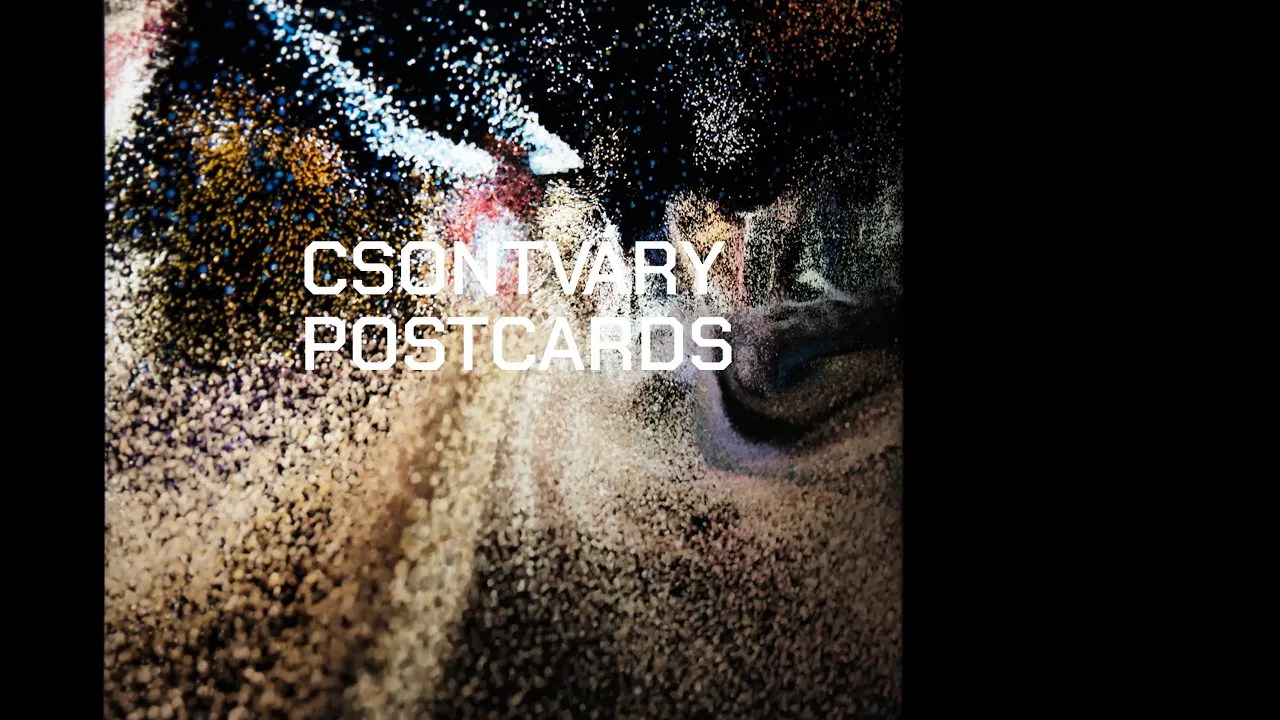
Csontváry Postcards is an interactive installation supporting the immersive exhibition Csontváry – In the Language of Photons in CODE (Center of Digital Experiences) Veszprém. The exhibition explores the life and artworks of famous Hungarian avant-garde painter Tivadar Csontváry Kosztka.
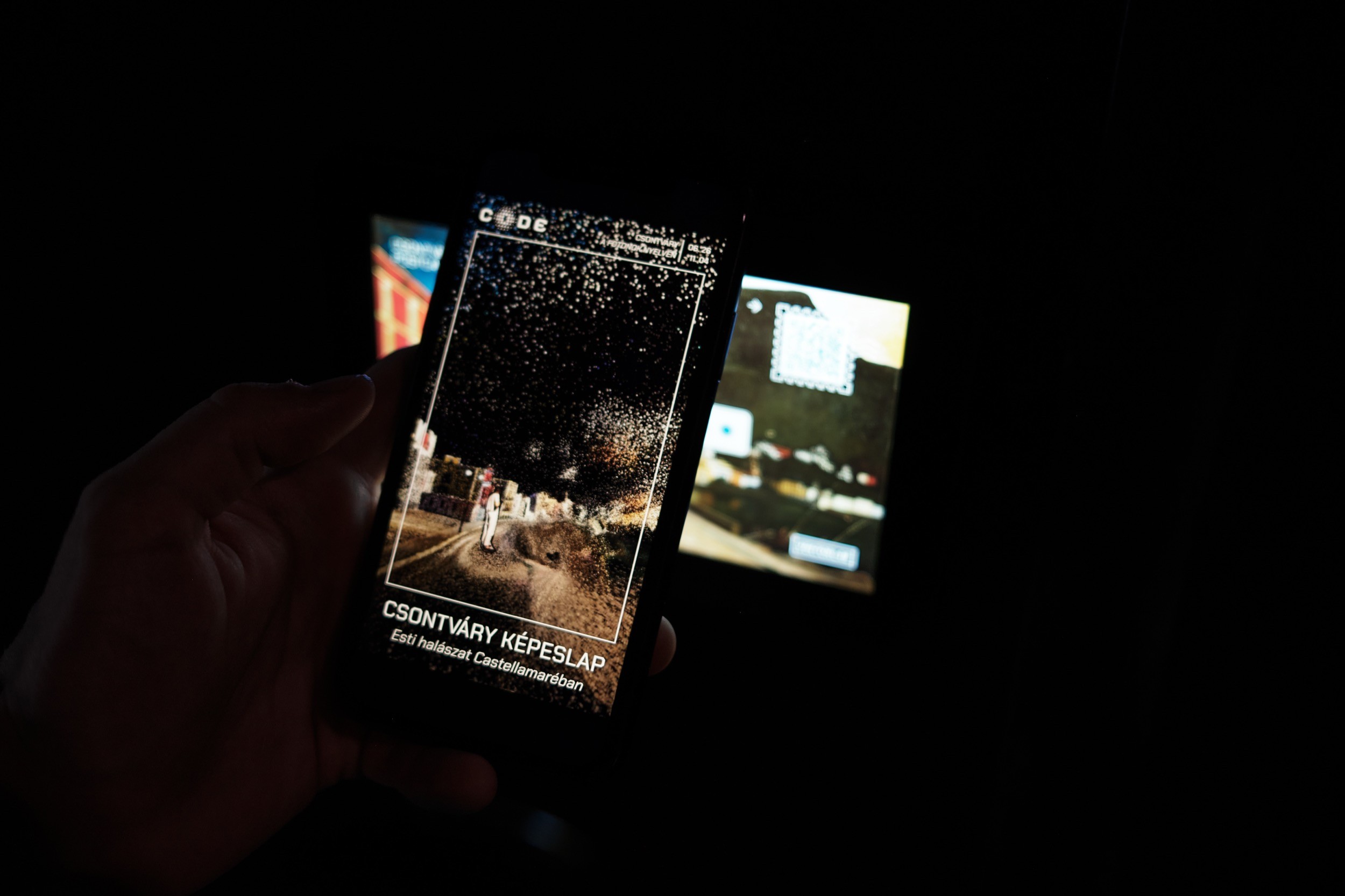
In this immersive experience guests can create a unique digital postcard by virtually being present in the scenery of the painting Night Fishing at Castellammare. A short video is recorded of them while they move around in the painting, which they can download as a memory of the event.
Development
This project involves a python program that processes the image of a depth camera, and sends the frames to an Unreal application. A separate mini touch GUI is available for visitors to control the recording of the virtual postcard, with additional feedback on the big screen. After the video is completed, guests can scan a QR code on the mini GUI and save the media this way. While the recording is active, the camera in the digital world shifts and viewers can observe themselves moving in the painting.
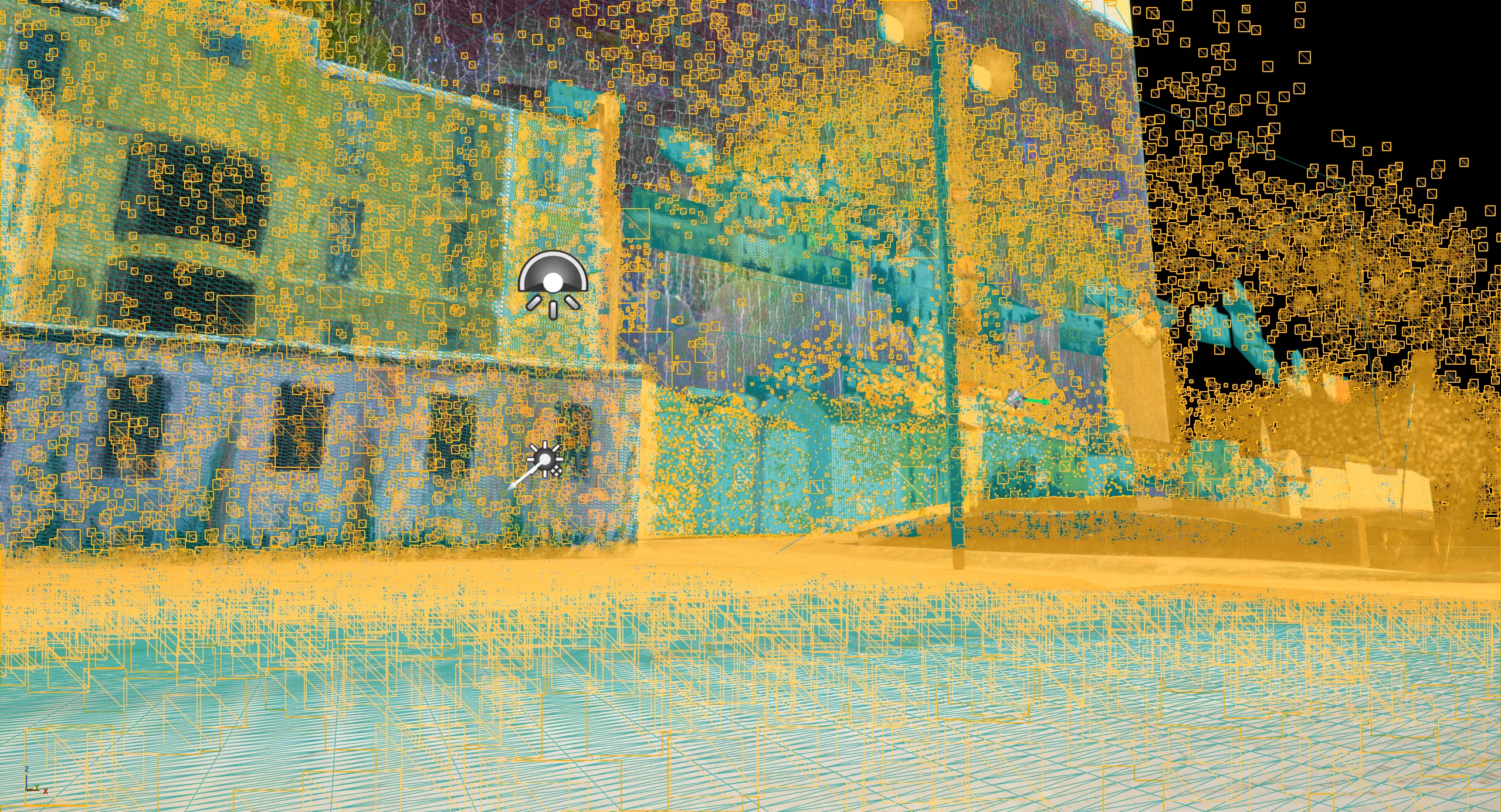
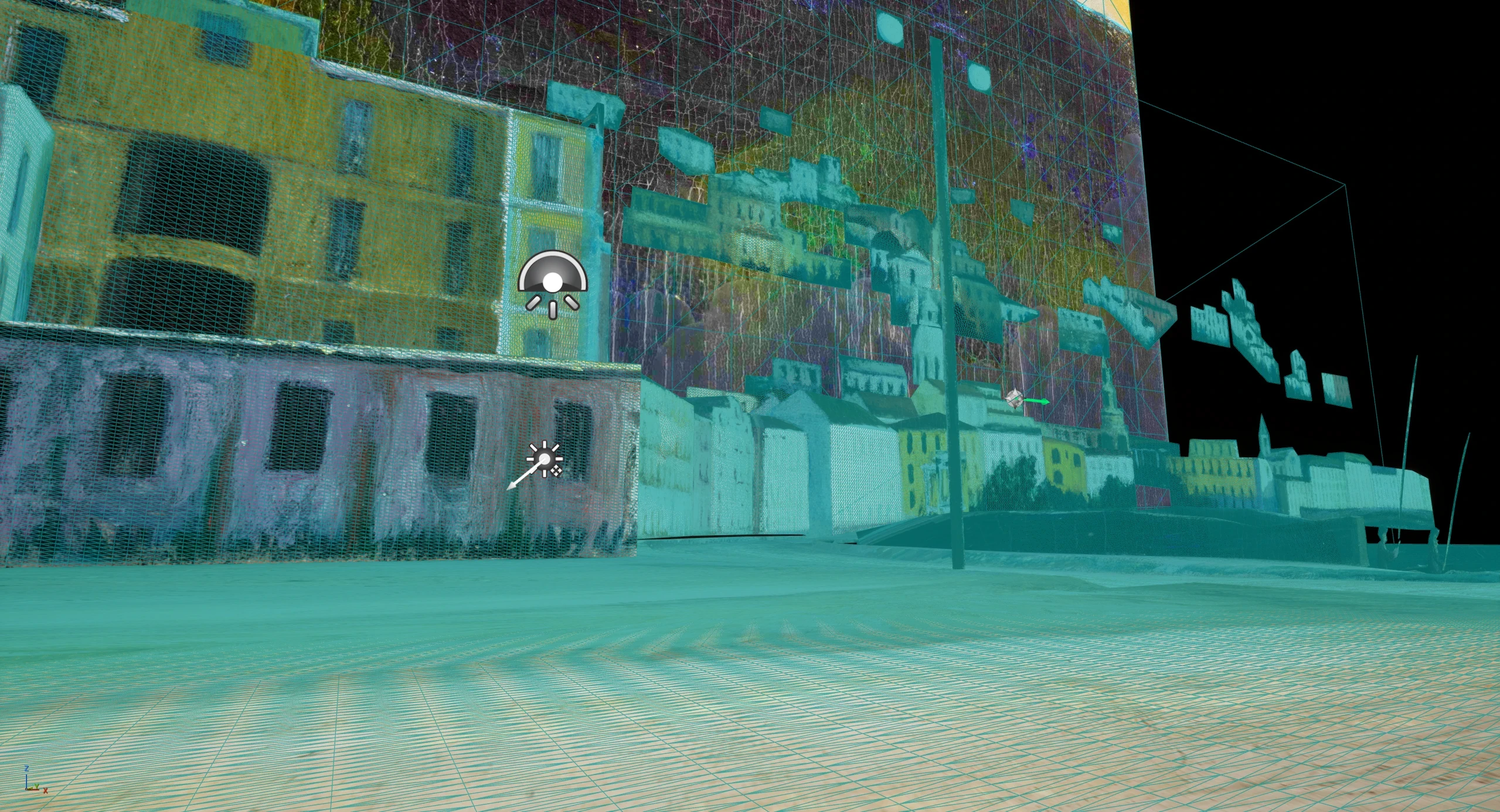
I developed the Unreal app, which is responsible for the main visual effects of the installation. Tons of particles are being generated continuously, mimicking the colors and positions of the original painting. To make this work, lots of thoughtful planning and preparation needed to be done. The painting Night Fishing at Castellammare was first recreated in 3D by my colleague, and then parts of the mesh were subdivided into more triangles – particularly where the objects are closer to the camera or it felt better visually. In Unreal Engine, the particles can read the vertex and triangle data from this huge mesh and spawn based on that. More triangles means more particles spawning on that surface. The mesh is actually not visible in the final view, because the density of the particles can reproduce the painting, sort of as if they were a point cloud.
The particles have a little randomness added to their spawn point, and got a flowing, artistic movement when no guests are nearby. The chaotic dust cloud becomes organized again when the depth camera detects a human silhouette. You can see the simulation of this below: